how to approach an engagement ring properly


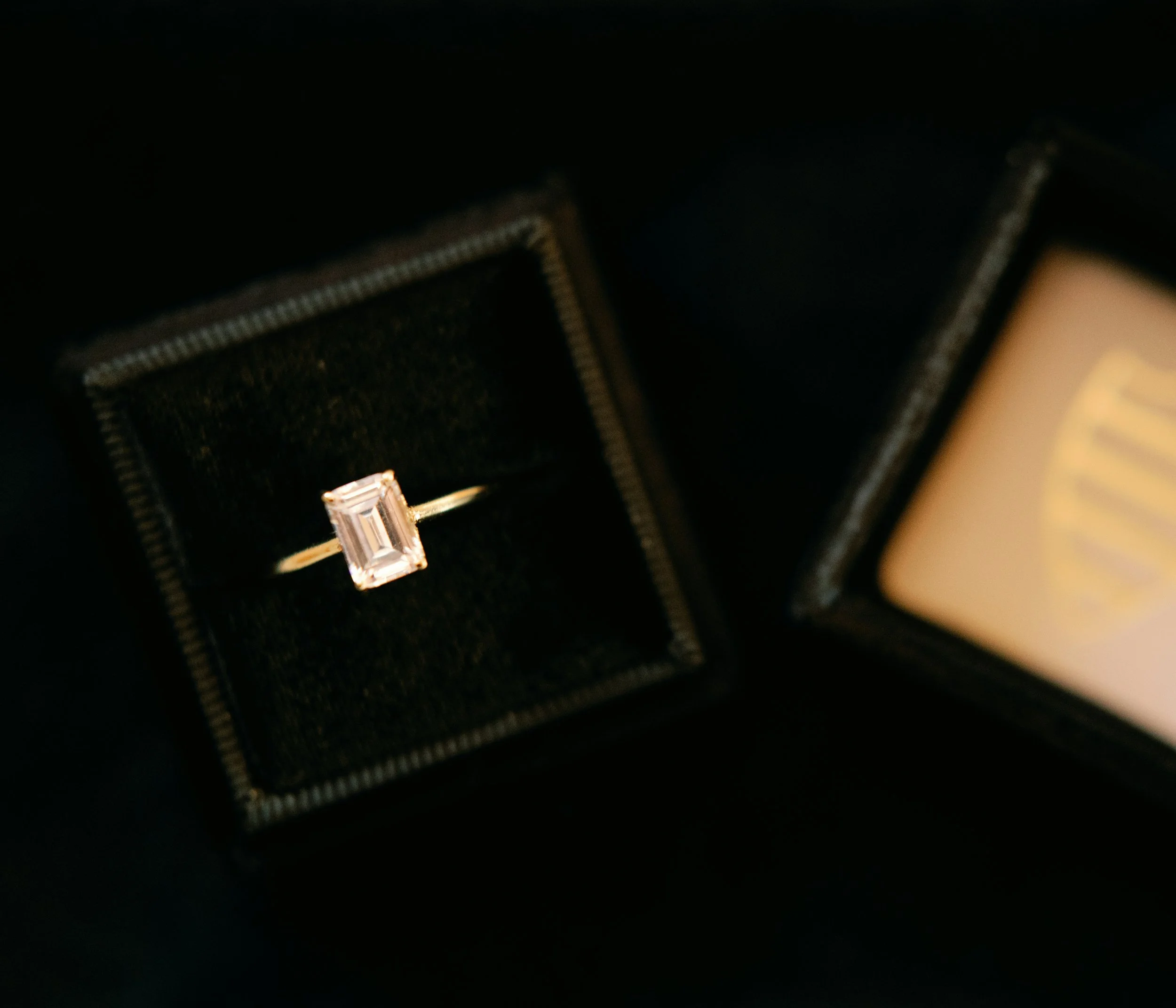
The engagement ring industry presents you with an overwhelming amount of information. Some of it is highly technical. Most of it comes from people with something to sell. Neither makes for an easy starting point.
An engagement ring isn’t just a purchase decision. It’s a series of judgements about diamond quality, design, and other many other factors . If you start by looking for answers, you’re more likely to follow whatever is presented to you, rather than understanding it.
A better place to begin is not with the ring itself, but with how you think about it.
Start with understanding, not options
The jewellery industry is very good at giving you choices.
Shapes, settings, carat weights, certifications, trends.
What it rarely does is explain how to interpret them.
Without that, everything starts to look the same. Or worse, everything starts to feel important.
In reality, not all factors carry equal weight. Some influence how a ring performs and looks in a meaningful way and others exist more as selling tools than useful measures.
Learning the difference is what changes the process.
Move beyond surface-level metrics
Most people are introduced to the same framework, the 4Cs, early on. It’s simple, widely used, and easy to communicate but it’s also incomplete.
Two diamonds with similar specifications on paper can behave very differently in reality. Light performance, proportions, and faceting style all play a role in how a diamond actually looks once it’s set and worn.
If you rely only on headline metrics, you’re judging something complex through a very narrow lens.
Understanding what sits beneath those surface indicators allows you to make decisions with far more clarity.
Consider the ring as a whole
It’s easy to isolate the stone and treat it as the entire decision.
In practice, the relationship between:
the diamond
the setting
and the hand it sits on
is what determines how a ring is experienced.
Scale, proportion, and design all influence presence. A technically well-specified diamond can still feel underwhelming if it’s not balanced properly within the ring as a whole.
Looking at each component in isolation misses that.
Be aware of how information is presented
Most people encounter engagement rings in environments designed to sell them.
That affects:
what is emphasised
what is simplified
and what is left out entirely
This isn’t necessarily misleading, but it is selective.
Having a framework of your own allows you to filter what you’re being shown, rather than relying on how it’s presented.
Take a more deliberate approach
There’s no need to rush the process.
The difference between a considered decision and a reactive one isn’t time spent, but how that time is used.
Approaching it properly means:
understanding what’s important
recognising what isn’t
and being able to judge what you’re looking at with some independence
An engagement ring will always carry meaning beyond the object itself but the process of choosing one doesn’t need to feel uncertain.
With the right approach, it becomes much clearer.